
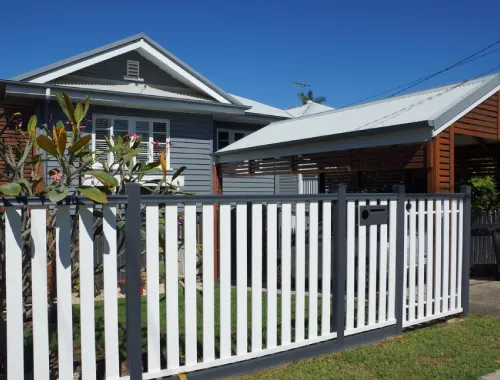
Geelong Boundary Fence Rules
Geelong Boundary Fence Rules
A boundary fence often feels like a simple upgrade until estate rules, neighbour obligations, height limits, and site conditions all start influencing what can actually be built.
For homeowners in Geelong, Werribee, Tarneit, and nearby growth areas, understanding those factors early can save time, reduce back-and-forth, and make the quoting process much smoother.
Why boundary choices are not always purely personal
Many homeowners assume they can choose any style they like as long as it suits the house. In reality, boundary decisions can be shaped by more than personal preference. Shared boundaries usually involve neighbour discussion, some front and corner fence designs trigger permit requirements, and certain estates or overlays can affect what is appropriate for the property. In Greater Geelong, council specifically advises owners to determine whether a building or planning permit is needed and to discuss a proposed fence with neighbours who share the same boundary.
That matters because a fence is not just a visual feature. It also affects privacy, streetscape presentation, access, and in some cases safety and visibility near roads or intersections. When those factors are considered at the start, the project usually moves forward with fewer surprises.
Estate and area guidelines can affect your options
In newer estates, developers often set design expectations for streetscapes and lot presentation during the earlier stages of the suburb. That can influence materials, colours, heights, and what is acceptable along frontages or visible boundaries. Even outside estates, planning overlays and local building rules may still shape what is suitable for a site.
A good example is heritage-affected property in Greater Geelong. The City of Greater Geelong states that under the Heritage Overlay, a planning permit is required to construct a fence if it is visible from a street or public park. That does not apply to every home, but it shows why the same approach does not fit every address.
This is one reason a site-specific quote matters. The right fence for one street may not be the right fit for the next suburb, the next estate, or even the next block.
The difference between shared boundaries and front fences
Homeowners often group all fencing into one category, but the rules can change depending on where the fence sits on the property.
For a shared side or rear boundary, Greater Geelong says the normal height of a boundary paling or Colorbond fence is generally 1.6 to 1.8 metres, and owners can erect a fence up to two metres high without a building permit. For fences above two metres, height, length, and setback limitations apply.
Front fences are treated differently. Greater Geelong defines a front fence as one within three metres of the front boundary. A front fence made of brick, stone, or masonry above 1.2 metres requires a building permit, while a timber or steel frame front fence above 1.5 metres requires a building permit. Most front fences above 1.5 metres also require council report and consent.
That distinction is important because a homeowner may be able to install one type of fence on a side boundary but face a very different approval path at the front of the property.
Corner blocks need extra care
Corner properties can create visibility issues for pedestrians, vehicles, and driveways, so fence placement near an intersection needs special attention. The City of Greater Geelong states that any part of a fence within nine metres of a point of intersection of street alignments can only be constructed up to one metre in height unless council consent and a building permit are obtained for a higher fence.
For homeowners, this means a corner block should never be treated like a standard internal lot. The same style that works well along a rear boundary may be unsuitable near the street corner because sightlines matter.
Neighbour discussion is part of the process
Boundary work can become stressful when owners leave the neighbour conversation too late. In Victoria, a Fencing Notice is the formal document used to propose repairing, replacing, or building a new fence, and the neighbour has 30 days to respond.
Not every project turns into a formal dispute, but the principle is clear: shared boundaries are best handled openly and early. Greater Geelong also notes that if you want to replace an existing fence along a shared boundary, you should discuss the matter with your neighbour or write them a letter, and that cost-sharing rules are governed by the Fences Act 1968.
That is why organised homeowners usually get better results. When the fence type, location, and basic expectations are discussed early, the installation stage tends to be much smoother.
Site conditions matter just as much as rules
Even when a fence type is suitable for the area, the site itself can shape the final solution. Sloping land, existing retaining needs, hard ground, limited access, old fence removal, nearby structures, and the exact boundary position all influence how the job should be planned.
This is where many rushed quotes fall short. A fence can look straightforward in a photo but become more complex once levels, access, or boundary details are checked properly. Clear measurements, site photos, and details about the existing fence help avoid vague pricing and unrealistic assumptions.
For homeowners, that means the smartest starting point is not asking, “What is the cheapest option?” It is asking, “What is the right option for this site, this street, and this boundary?”
How to plan with more confidence
If you want the process to feel easier, there are a few practical steps that help:
Check whether your property sits in an estate, on a corner, or in a heritage-affected area.
Confirm whether the fence is a front fence, side boundary, rear boundary, or shared boundary, because the rules can differ significantly.
Have accurate measurements ready, along with clear photos and details about the existing fence and any gate requirements.
Speak with the neighbour early if the fence is shared, especially if replacement or cost-sharing is likely to be involved.
Choose a contractor who is willing to inspect the site properly instead of guessing from limited information.
A better boundary project starts before installation day
The best boundary projects are usually the ones that are thought through early. When homeowners understand local rules, shared-boundary obligations, and the realities of their site, they can make clearer decisions and avoid preventable delays.
Dream Fencing Services works with residential customers who want straightforward advice, quality-focused workmanship, and a quoting process built around the actual property, not assumptions. If you are planning a fencing project in Geelong, Werribee, Tarneit, or nearby areas, get in touch to arrange a quote and discuss the right approach for your boundary.